


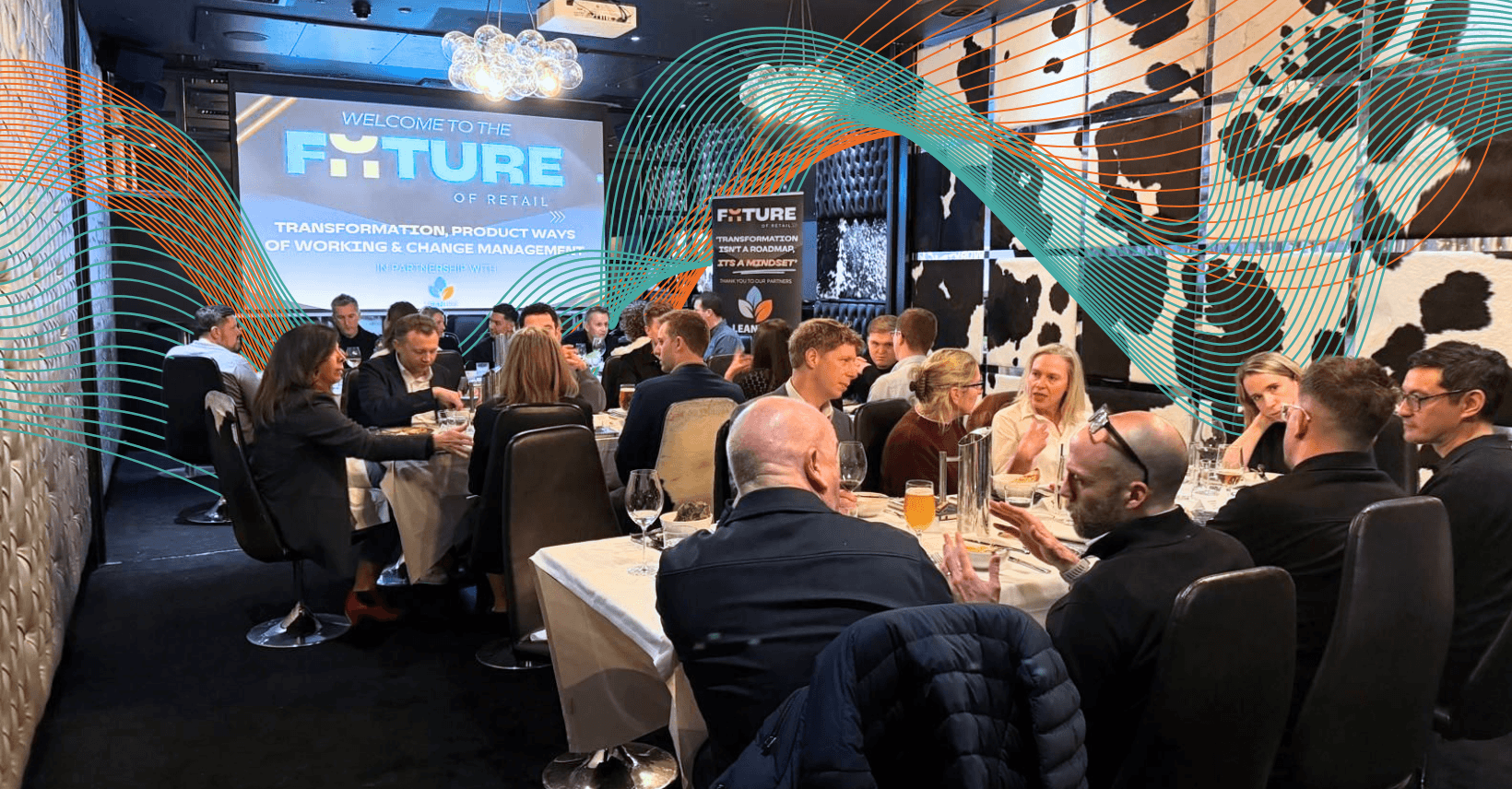
In March we were invited to partner with Future of Retail for one of their events. These evenings bring together a room full of senior retail leaders to discuss challenges and topics they are all facing today. With representation from giants in the retail sector in the room including Boots, Burberry, John Lewis & Partners, Selfridges, Gymshark, Sainsbury's, Primark, River Island, The White Company and more, our invitation was extended as an expert in the world of product and change management, to share our knowledge.
We shared our experiences of how product and change management partnering in harmony can facilitate some of the most effective transformation and change that we have seen. From product-led thinking and operating models to leadership, culture and effective change management, the discussion reflected the real challenges businesses are navigating right now.
We were also able to include a few key members of transformations past to share and reflect on the impact that product mindsets and change management had, bringing real life examples of how Lean Tree has delivered value to organisations in the retail space previously.
Biggest Takeaways
While in a room with such experienced retail leaders, the largest takeaways from the evening were shared within the final element of the evening, a discussion session that allowed the group to explore key areas of impact that were selected from real day-to-day challenges the retailers were facing.
We have listed three of them below and would be keen to hear your thoughts.
The ever-changing role of product and the impact AI is having and will continue to have on product management and UX. The rise of agentic commerce and intelligent systems is prompting organisations to consider the evolution of Product teams and value definition.
The areas of this conversation revolved around:
Redefining product roles: Product managers and designers are increasingly expected to work alongside AI systems, not just build for users.
The rise of new skill sets: Capabilities such as prompt engineering and AI fluency are becoming critical in shaping product experiences.
Where value is created: As AI takes on more execution, the human role shifts toward problem framing, strong discovery, ethical oversight, and ensuring meaningful customer outcomes.
A consistent challenge across organisations in terms of how change and transformation add value and how to measure and quantify metrics to do with change, transformation and adoption.
From the presentation element of the evening, Emily shared “The new system or tech is the enabler… but the complete value is realised through a product-led lens and recognising the change impacts needed to maximise that value.”
This gave the group the chance to explore:
Beyond delivery metrics:
Value is not just in implementation, but in adoption, behavioural change, and long-term impact.Product-led transformation:
Applying product thinking to the change helps teams continuously measure, iterate, and improve outcomes.The value of experimentation:
Even failed experiments contribute value by building a culture of learning and refining future approaches
While technology often leads transformation efforts, the discussion highlighted a critical truth: successful change is fundamentally human. When should change management begin in a transformation, and what does good look like in ensuring change truly lands across the business?
This led to brilliant conversations shaped around:
When change management should begin:
Change management should not be an afterthought, it must start at the earliest stages of transformation as it is foundational and not optional.Designing for real people:
Behind every change are individuals whose behaviours, mindsets, and ways of working need to adapt for the change to be successful.Investing in adoption:
Engaging, supporting, and empowering people throughout the journey significantly increases the likelihood of lasting change.
Change With Real Impact
The conversations in the room reinforced a simple but powerful truth: meaningful transformation doesn’t come from technology alone. It happens when product thinking and change management work together, aligning strategy, systems and, most importantly, people.
Organisations that succeed are those that treat change as a continuous, product-led journey. They focus not just on delivery, but on adoption, behaviour, and long-term value creation.
If you are considering embarking on a change or transformation within your business and can see the impact that a lack of product thinking and change management could have on the outcomes, speak to a member of our team to find out more.